


Door Stopper Types Explained: Magnetic vs Floor vs Wall-Mounted — Which One for Your Home?

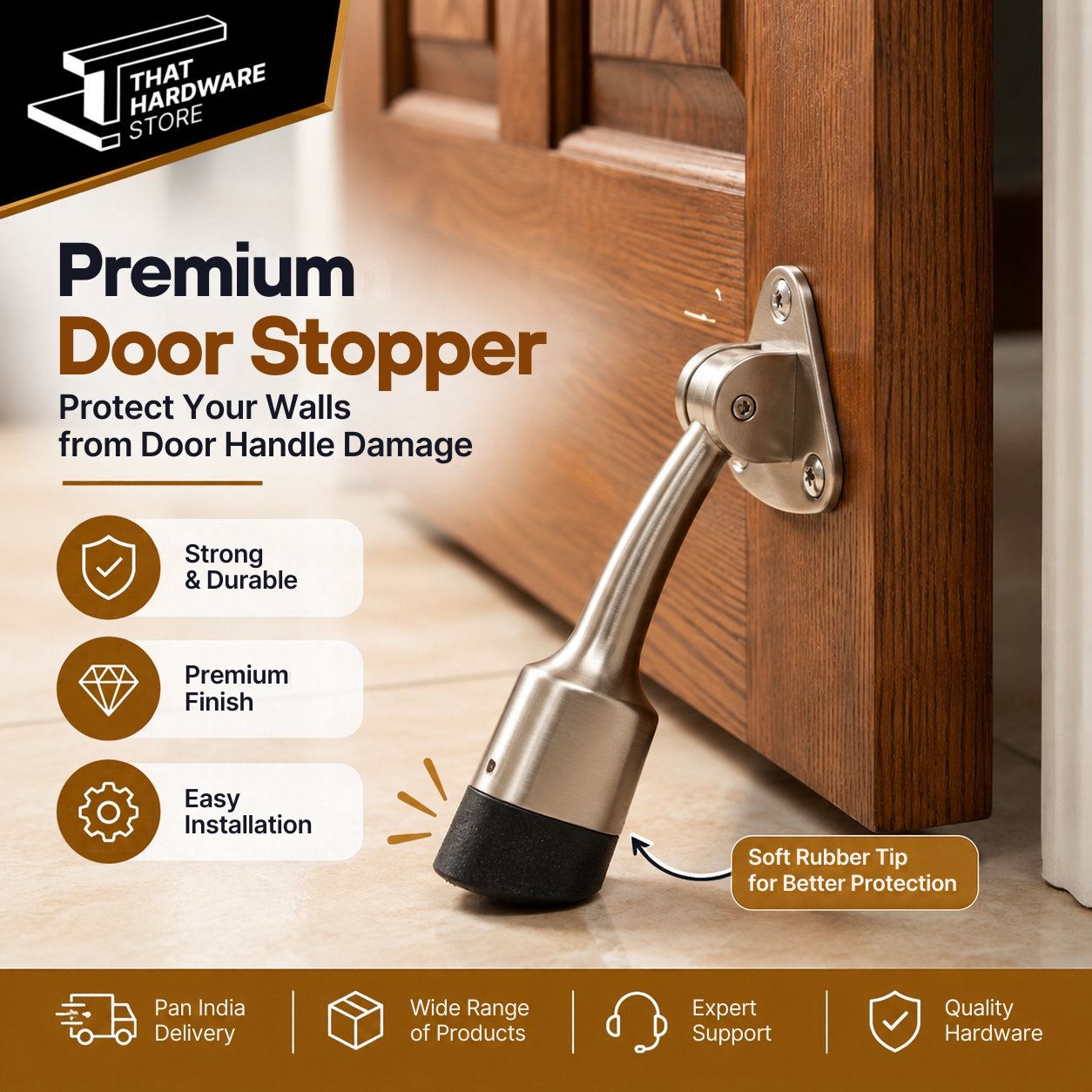
Looking for a premium door stopper for your home? A premium door stopper helps protect your walls from door handle damage while adding a clean and stylish finish to your doors. With durable construction, a soft rubber tip, and easy installation, it is a practical choice for bedrooms, living rooms, offices, and other interior spaces.
Quick answer
For most Indian homes, a floor or wall-mounted stopper is the simplest way to protect a wall from the door handle. Choose a magnetic door stopper (catcher) if you also want the door to stay open. Heavy main doors need a stainless steel or brass stopper. Rubber suits only light interior doors.
Why every door needs a stopper
A premium door stopper is a simple way to protect your walls from repeated impact while keeping your doors safe and secure.
A door that swings freely hits something: the wall, a wardrobe, the bathroom tiles. The handle leaves a round dent in the plaster, chips the paint or cracks a tile. Over a few years the impact also loosens the hinge screws, so the door starts to sag. That is why even the plain doorstop has so many forms.
A stopper does one job: it stops the door before it reaches the wall. Some types add a second job, holding the door open. That difference splits the market into the types below.
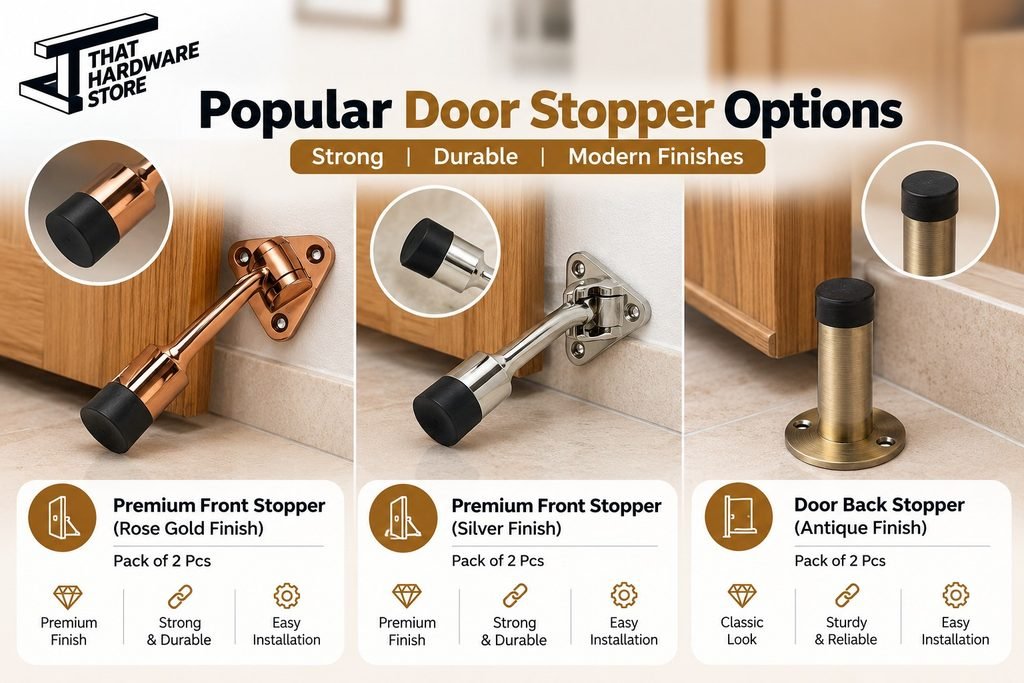
The 4 main types of door stoppers
| Type | Where it fixes | Holds door open? | Best for | Weak point |
| Floor-mounted | Floor, near the wall | No | Main and heavy doors | Trip hazard if badly placed |
| Wall-mounted | Wall, at handle height | No | Bedroom and bathroom doors | Needs a solid wall |
| Magnetic (catcher) | Floor or wall, plus a plate on the door | Yes | Living room, balcony, passages | Weak magnets let go in a breeze |
| Door-mounted / hinge type | On the door or hinge | Some models | Glass and uneven floors | Fiddly to fit |
1. Floor door stopper
A floor door stopper is a small post, cone or bullet fitting screwed into the floor a few inches from the wall. The door bumps into it before the handle reaches the wall. It is the most common type in India because it works with almost any wall.
| Fixes to | Holds open | Best for |
| Wall | No | Interior doors |
- Place it so the door touches it when the handle is 2 to 3 cm from the wall.
- Keep it out of the walking path, or people will trip on it.
- Marble and vitrified tile need the right drill bit and a rawl plug. Ask your fitter first.
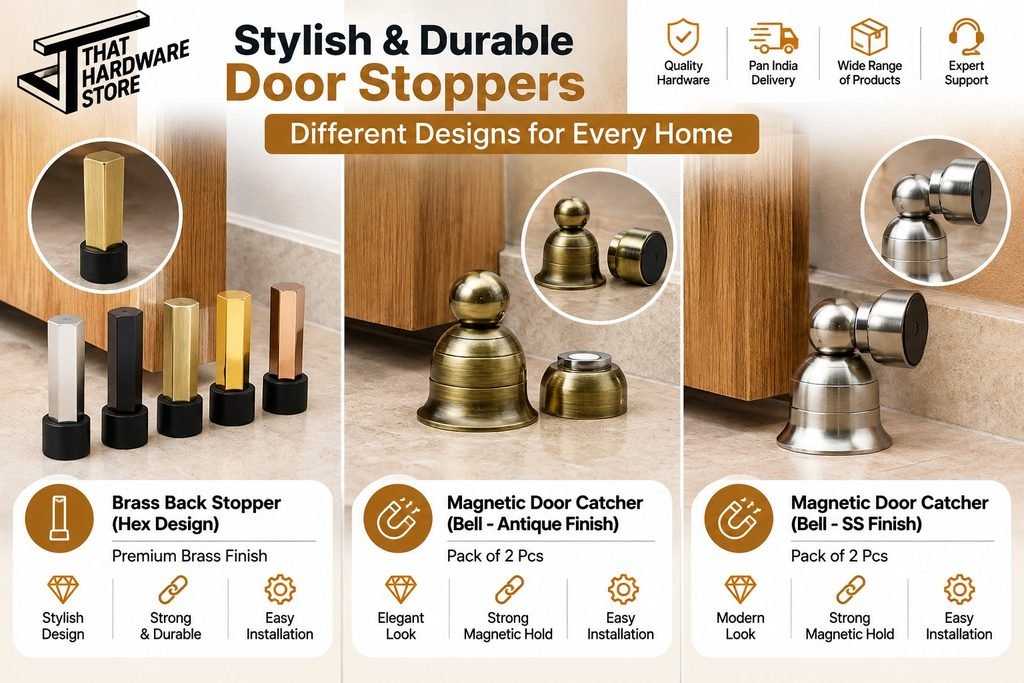
Our premium stainless steel magnetic catcher below fixes to the wall and the door, so it doubles as a wall-mounted stopper.
3. Magnetic door stopper (door catcher)
A magnetic door stopper has two parts: a magnet fixed to the floor or wall, and a steel plate on the door. When the door swings open, the plate meets the magnet and the door stays put. It is the only type that does both jobs. This is what most people mean when they search for a magnetic door stopper or a door stopper magnet.
| Fixes to | Holds open | Best for |
| Floor or wall, plus door | Yes | Living room, balcony, passage |
- Magnet strength varies a lot. A weak magnet will not hold a heavy door in a draught.
- A magnet does not replace a stopper on a heavy door. A hard swing can still hit the wall.
- Compare plate size and holding power, not only the finish.
For a very light door, the Twinkle PVC magnet catcher (₹75) is the budget option. Want to see how a large manufacturer lists them? Browse Dorset’s door guards and stoppers.
4. Door-mounted and hinge-type stoppers
These fit on the door or the hinge instead of the floor or wall. A coiled spring stopper and a hinge pin stopper are the common ones. They suit doors where the wall or floor cannot take a fitting, such as glass doors, or where the floor is uneven. Spring stoppers can twang, and cheap ones lose their bounce within a year. This is a small part of our range, so message us on WhatsApp if your door needs one.
Rubber vs stainless steel vs brass: which material?
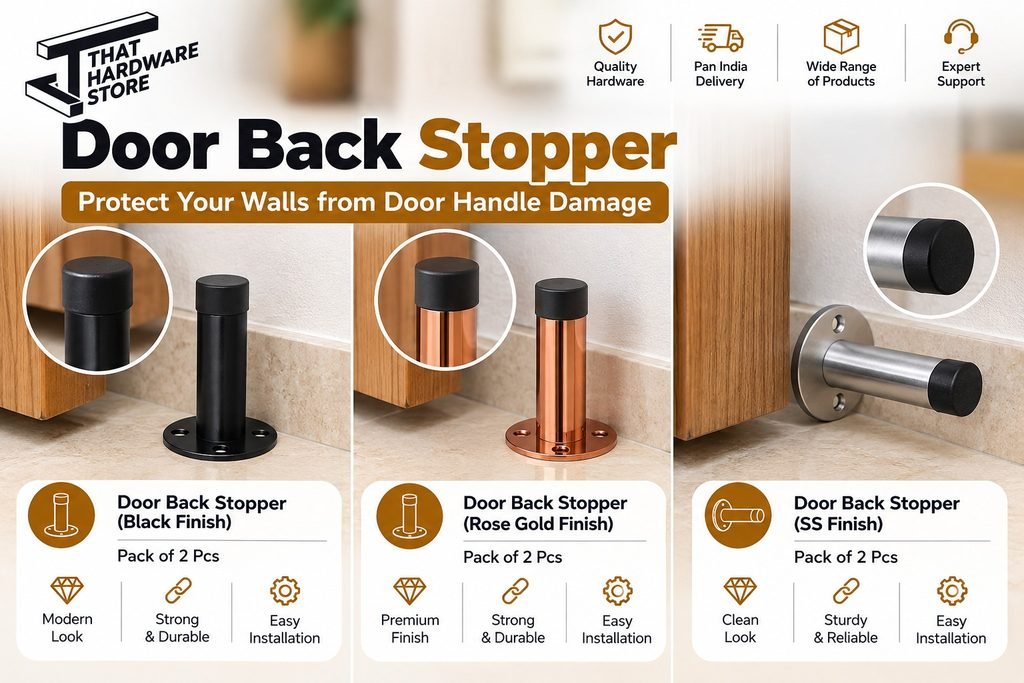
When choosing a premium door stopper, look for durable metal construction, a strong fixing mechanism, and a soft rubber tip for better protection.
| Material | Price | Lasts | Best for |
| Rubber | Lowest | Short. Hardens and cracks in heat | Light interior doors |
| Zinc alloy | Low to mid | Medium. Finish can wear off | Interior doors |
| Stainless steel | Mid | Long. Does not rust | Bathrooms, balconies, main doors |
| Brass | Mid to high | Long. Develops a patina | Traditional and heritage homes |
Rubber hardens in Indian summers and the tip cracks. Stainless steel is the safe choice near a bathroom or balcony, where humidity attacks weaker metals. For a warm, traditional look, try the brass hex back stopper.
Which door stopper for which door?
- Main door: a stainless steel or brass floor stopper. Take the heavy version.
- Bedroom door: a wall-mounted or low-profile floor stopper.
- Bathroom door: stainless steel only. Avoid iron or plain zinc.
- Living room or passage door you want held open: a magnetic catcher.
- Glass door: a door-mounted or hinge-type stopper, or a floor stopper with a soft tip so it does not chip the glass.
- Wardrobe or cupboard door: a small cabinet stopper, not a full-size one.
Door stopper price in India
Filter by type or budget. Prices are live from our store as on 29 Sep 2026 and can change.
| Door Stopper Product | Price |
| SS Floor Stopper, Silver | ₹150 |
| SS Floor Stopper, Antique (Heavy) | ₹175 |
| Door Back Stopper, SS Finish (Pack of 2) | ₹149 |
| Magnetic Door Catcher (Bell), SS (Pack of 2) | ₹299 |
| Premium Magnetic Door Catcher, Antique (Pack of 2) | ₹379 |
| Twinkle PVC Magnet Catcher, White | ₹75 |
Common mistakes to avoid
- Buying only on finish. A pretty stopper with a weak base will come loose.
- Fixing it too close to the wall. The handle still hits.
- Using a magnetic stopper alone on a heavy main door and expecting it to hold in wind.
- Skipping the rawl plug on tile or concrete.
- Choosing rubber for a bathroom or balcony. It will crack and stain.
Our pick for most homes
For a typical flat: a heavy stainless steel floor stopper for the main door, a back stopper for each bedroom, and a magnetic catcher for the living room door you like to keep open. Together that costs less than repainting one damaged wall.
Choose a premium door stopper that matches your door type, installation surface, and interior style for long-lasting protection.
Not sure which one fits your door?
Send a photo of the door and the wall behind it. We will tell you which stopper to buy and where to fix it.
FAQs
The four main types are floor-mounted, wall-mounted, magnetic (door catcher) and door-mounted or hinge-type stoppers. Floor and wall types only stop the door. Magnetic types also hold it open.
A floor stopper is better for stopping a heavy door from hitting the wall. A magnetic door stopper is better if you also want the door to stay open. Many homes use both, on different doors.
They can hold a heavy door in still air, but a strong draught or a hard swing can pull it free. Pair a magnetic catcher with a floor stopper on heavy main doors.
Fix it so the door touches it about 2 to 3 cm before the handle would reach the wall. For a wall-mounted type, line it up with the handle height.
Stainless steel is the best all-round choice because it does not rust in humid areas. Brass suits traditional homes. Rubber is the cheapest but hardens and cracks in heat.
Rubber back stoppers start around ₹75 a pack. Stainless steel floor stoppers start around ₹150 and magnetic catchers usually fall between ₹300 and ₹400 a pack. Check the live prices before you buy.
